POLO PRIZE 2025: These are the winning projects
In collaboration with KU Leuven, POLO launches the second edition of the POLO Prize, honoring student projects that push the boundaries of architecture, engineering, and design education. This distinction is awarded to outstanding designs created within the studios of the ASRO department at KU Leuven.
The POLO Prize was first introduced in the academic year 2023–2024 with the ambition to highlight the importance of design education within the program. By recognizing student work, the prize draws attention to the role of design disciplines - architecture, engineering, urbanism, and heritage conservation - in addressing the pressing challenges of our time.
Through this initiative, POLO and KU Leuven aim to encourage innovative thinking and celebrate the creativity and commitment of future architects. We proudly present the three winning projects of this year’s POLO Prize.
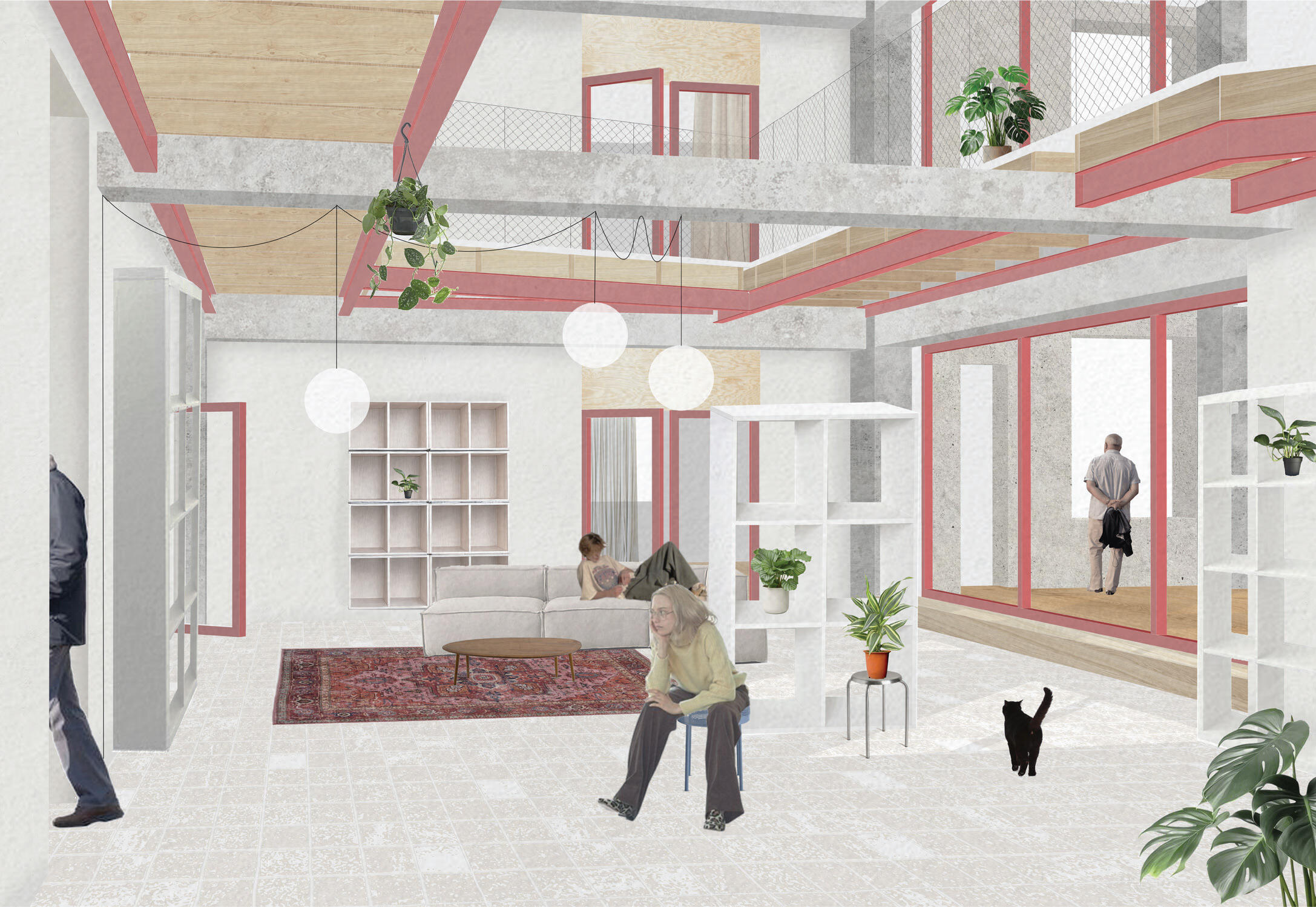
Park as Building
Submitted by Arne Briers, Auke Schols, Jari Sijbers, Florian Verbruggen

Park as Building aims to dissolve the boundary between park and architecture, weaving together nature, heritage, and urban development. At the edge of Leuven’s urban fabric and the future Hertogensite, the project reclaims a forgotten zone as a vibrant landscape where nature and human use coexist. Through minimal interventions, biobased and reclaimed materials, and passive strategies informed by climate analysis, it reduces ecological impact while creating flexible, future-oriented spaces. The former Aveve building becomes a “building in the park,” while the old dispensary transforms into a “park in the building” - a place for co-working, creation, and encounter. More than a finished object, the project is an open invitation to collectively shape a resilient and socially relevant place.

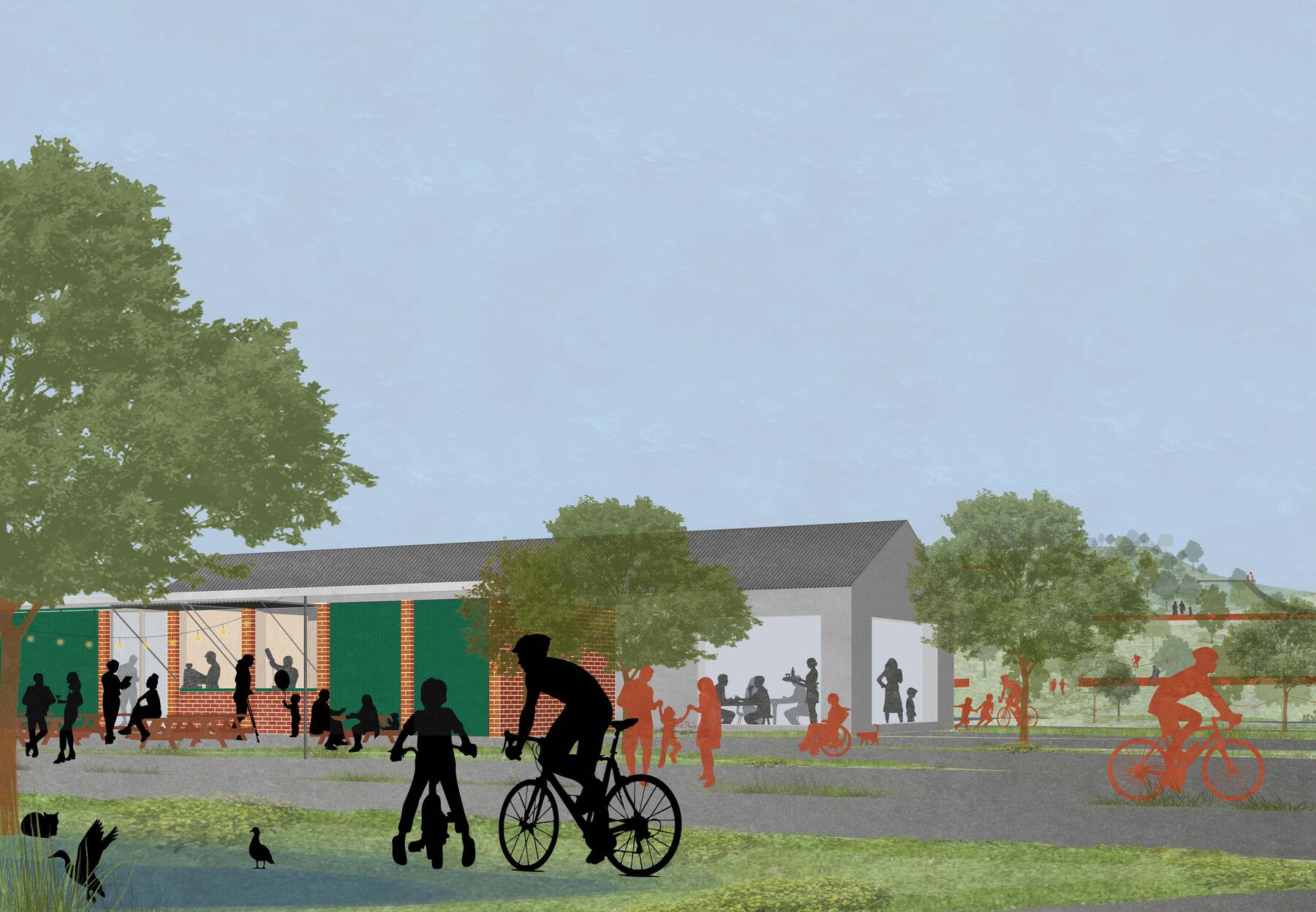
Stony Village
Submitted by Blerta Berisha, Kacper Bozek, Emma Brackeniers, Lucca Burggraeve, Rune De Nys, Wannes Hendriks, Sapho Pardon, Pieter Persoon, Lotte Scheirs

Studio Stony Village investigates the future of the former brick factory site in Steendorp, Temse. Centered on circular material flows, the design experiments exclusively with the reuse of on-site materials, exploring how time and space can guide a new approach to architecture. This perspective aims to reshape the architect’s role into that of a curator of place and materials, leading to a vernacular aesthetic shaped by hands-on processes rather than full control. The studio collectively envisioned five development stages - from existing inventory to successive design phases - each coordinated through shared projects and a material flows board. The result is a contextual and precise series of visions in which reuse and transformation define the site’s ongoing architectural identity.
Bouwblok Wet130
Submitted by Alexander Robberechts, Benjamin Rowe
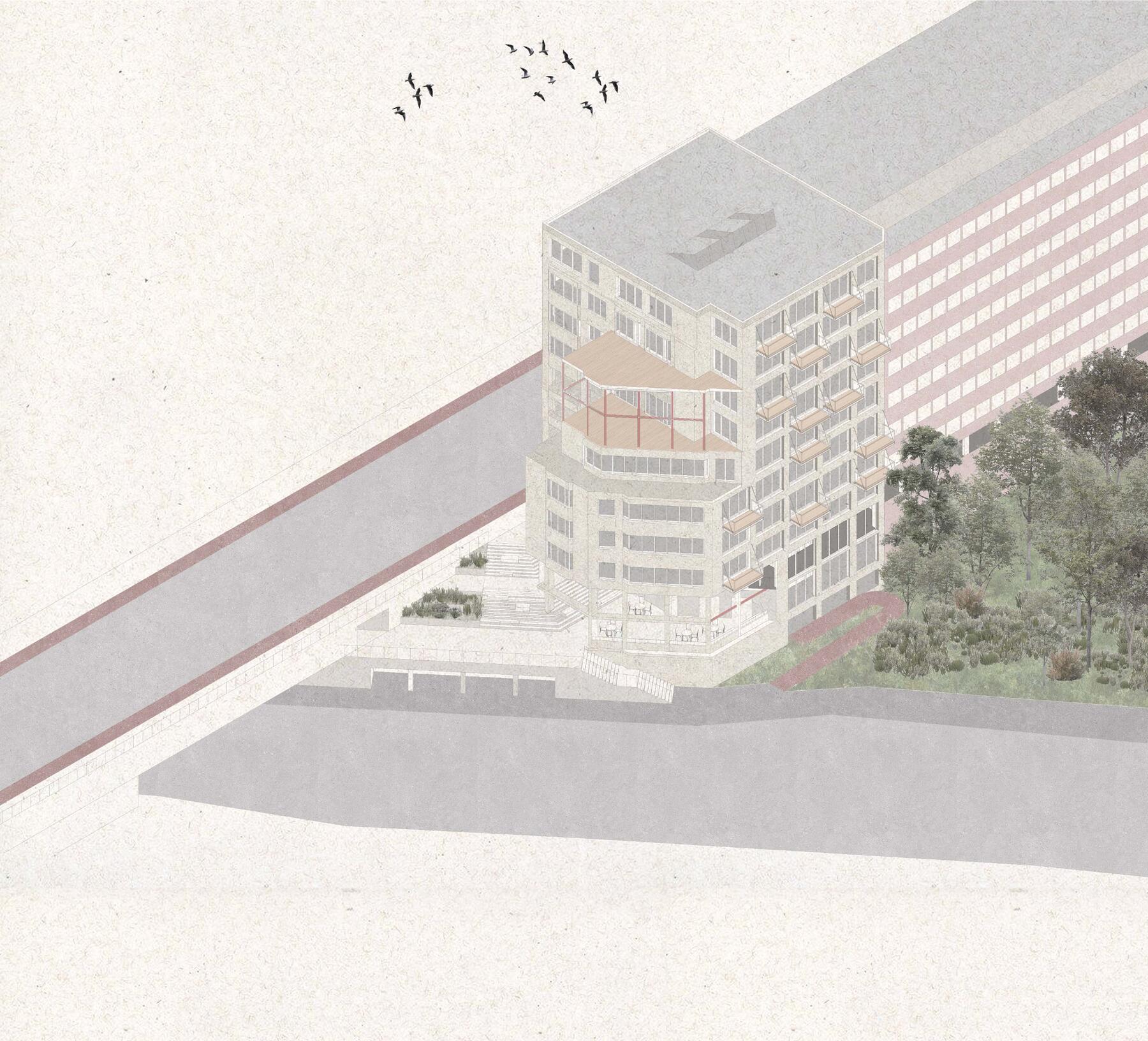
Wet130 explores the conversion of office buildings into housing, with a focus on Brussels’ European Quarter. Starting from a masterplan for a green urban oasis within the Wet130 block, the project zooms in on the corner building along the Wetstraat.
The design introduces a strategy where two floors are linked through a double-height collective space. This creates a balance between private and shared areas, with communal spaces forming the backbone of each housing cluster. Outdoor areas are also organized collectively to ensure high-quality living and generous public space.
With a strong emphasis on sustainability, the project reuses existing structures and materials while reimagining the iconic corner building’s architectural identity. It aims to strengthen Brussels’ urban character while offering resilient housing environments and meaningful shared spaces for future residents.