DEME Pavilion

Generous, un-partitioned interior spaces wrap around a central core, allowing a variety of activities and functions to unfold. The monochrome restraint of the architecture takes a backseat to the exhibited displays inside as well as the natural environment outside. Yet the organic flow of the design subtly nudges visitors into a spontaneous route of relaxed exploration.
Promenade Architecturale
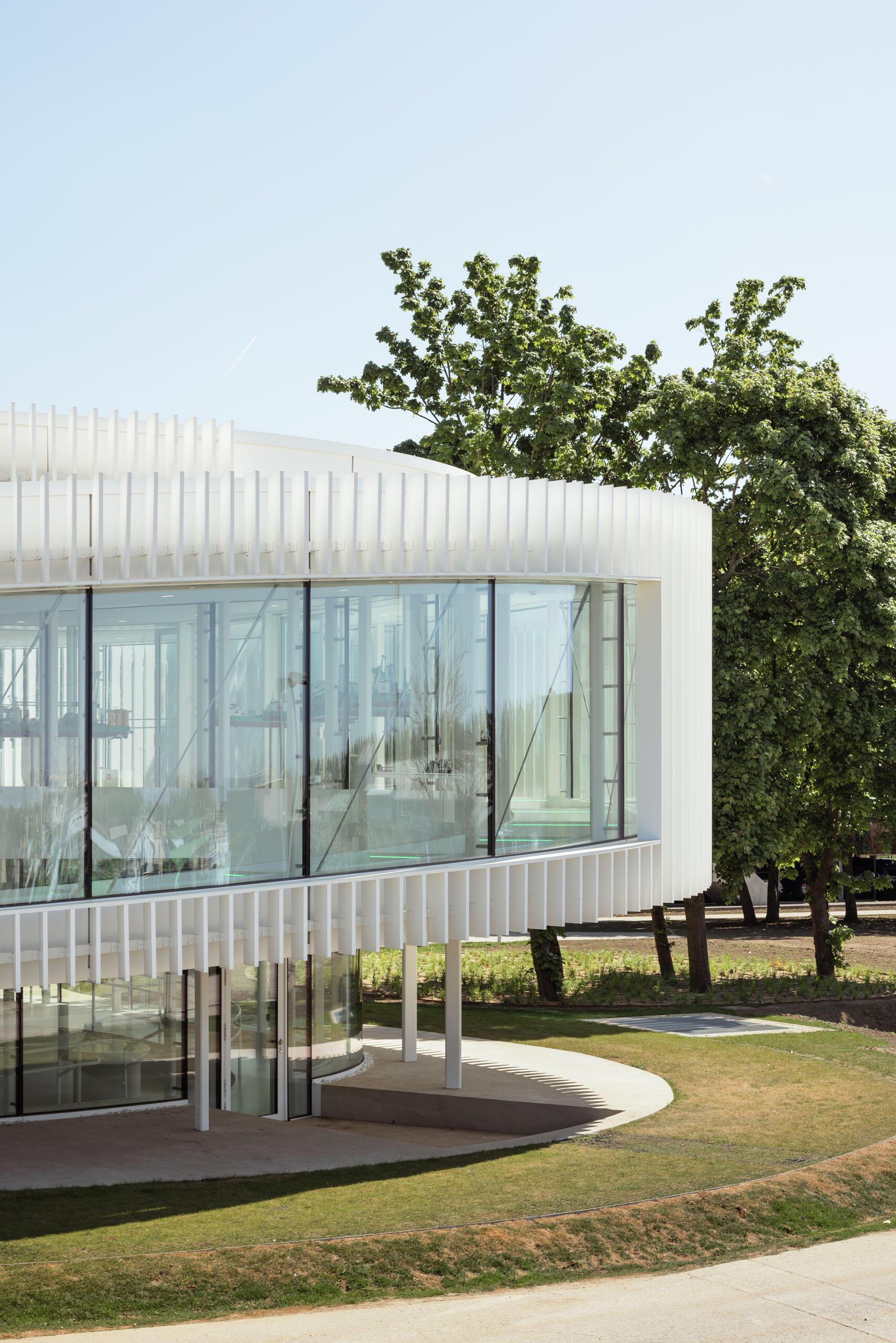
A covered walkway connects the pavilion to the walkway network linking up the different on-site facilities and future POLO-designed headquarters. The canopy forms a visual extension of the building’s spiralling shape, merging it with the fluid lines of the landscape design. During rainfall the water cascades off the roof edge, forming a water curtain between path and vegetation.
The main entry is articulated as a solid box, the only element that breaks through the curved glass skin wrapping the building. Once inside, a stair carved out of the concrete core gives access to the basement, where we find washrooms and back of house functions.

Back on the ground floor we access the main exhibition space via a few downward steps or a long ramp. Its sunken character changes the visitor’s perspective on the surrounding lawns, increasing the intimacy of this expansive space - like a conversation pit carved out of the landscape.
Alternatively, as visitors walk up the long lazy stair curving around the building, they are treated to continuously changing views of the outdoors. This route culminates in a panoramic appreciation of the landscape from the multifunctional spaces on the first floor.
Modulating between indoor and outdoor
The structural setup of the pavilion is straightforward but elegant. The round core contains vertical circulation and technical installations while also ensuring horizontal stability. From this central element extends a flat concrete slab, additionally supported by slim steel columns at the perimeter of the building. For structural and fire safety purposes these steel box sections are filled with concrete.
The building has an all-glass façade, composed of curved panels which stretch from floor to ceiling. Each triple-glazed unit is unique, custom-made to suit the organic shape of the floor plan. A layer of vertical fins is applied to the lazy stair and continues to wrap around the first floor’s glass façade. The façade on the ground floor has no need for these fins as the staircase volume in front of it provides necessary sun-shading.


The vertical fins do not just offer solar protection, reducing glare and thermal loads. They also direct the visitor’s views so the surrounding landscape is discovered gradually, increasing the suspense of the architectural promenade. On top of this they render the curved building volume more solid and readable when seen from the outside. The varying degrees of transparency and shading across the screened façade ensure a continuously changing appearance when the building is approached from different angles and at different times of day.
The layer of fins is perforated by rectangular cutouts to create framed views of the landscape and an access portal towards the outdoor terrace on the first floor. From this terrace a generous staircase spirals down to the park below, another sculptural flourish that connects the built volume back to the surrounding landscape.